Introduction: The High Cost of High-Risk Care
For care facilities managing very high-risk individuals, providing an extra level of care and support during night shifts is a significant operational and financial challenge. At Wigan Council, providing 1:1 support for residents with challenging behaviour or a high risk of falling costs £84,000 per annum.
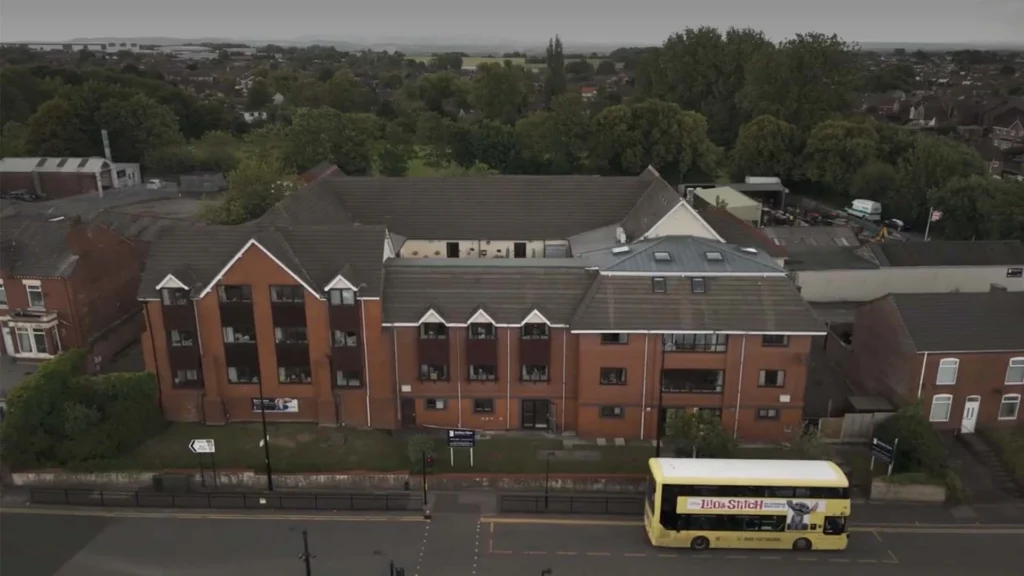
Traditionally, staff checked on residents every two hours during the night. However, physically entering the room can wake residents, which can actually lead to falls. Seeking a safer, more efficient approach, Wigan Council implemented Wellbeing Sensors in the five most prominent falls and 1:1 risk rooms at Ashton View Nursing Home.
“The sensors had a dramatic reduction in falls by 85.7%. In the room that did have two falls, the system evidenced our response times as 15 and 54 seconds. We also completely changed our 1:1 support process. Amazing!”
— Care Home Manager, Wigan Council
Key Performance Metrics
The installation of the sensors produced a rapid transformation in both safety and resource allocation:
- 85% overall reduction in falls.
- 50% reduction in 1:1 care requirements.
- 80% of the monitored rooms had 0 (zero) falls.
- 1 minute typical response time to alerts.
- 36 average remote welfare checks conducted per night.
- 9.6 average bed exits attended per night.
The Challenge: Reversing the Trend
Before the installation, the five high-risk rooms at Ashton View Nursing Home averaged 14 falls every 3 months. The facility needed a way to protect these residents without increasing the costly and intrusive 1:1 physical checks.
The Solution: Remote Oversight and Pre-Fall Alerts
Wellbeing Sensors introduced Pre-Fall technology, which operates entirely without camera surveillance. Instead, the system utilises heat mapping, sleep pattern characteristics, breathing rate, heart rate, sound levels, and microwave sensors to alert carers before a resident leaves the bed.
This allows staff to monitor residents remotely without disturbing their sleep. A multi-view monitor allows a single staff member to oversee up to 12 residents simultaneously from one screen, ensuring everyone is safe while they sleep.
The Impact: Accelerated Response Times and Reduced Incidents
Following the installation, the total number of falls across the five rooms dropped from 14 to just 2.
Theresa Emons, Care Home Manager at Ashton View Nursing Home, explained the impact: “After the installation, we had 0 falls in 4 rooms and 2 falls in 1 room. Of those 2 falls, we attended both in under 1 minute which we could not previously record. Here we also reduce the associated costs and processes with investigating fall incidents.”
Because the system allows staff to view a thermographic heat source remotely, they only send a staff member into the room the moment there is an issue, driving the average response time to under one minute.
Evidence and Incident Reporting
When a Bed Exit triggers the sensor, the system generates a detailed Incident Report. These reports are time and date stamped, include narrative support, and are reinforced by bio-data demonstrating the exact movements during the episode.
Not only is this reassuring for family members, but this concrete evidence also helps reduce litigation claims by demonstrating that good, proactive care is being delivered.
(Note: An independent clinician has completed a white paper documenting the evidence, outcomes, and data collected during this project.)