Introduction: The Challenge of Second-Floor Monitoring
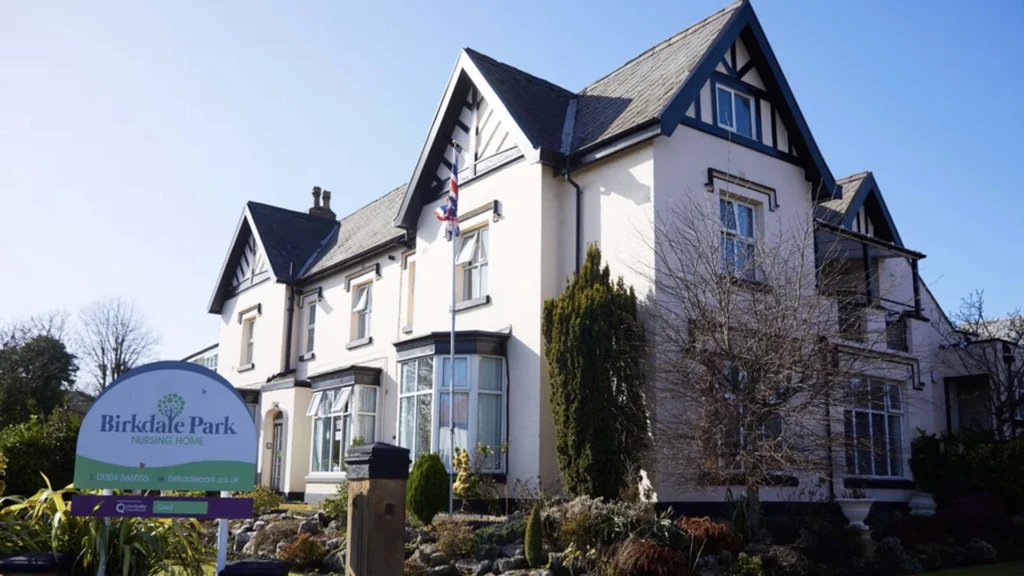
Birkdale Park provides 24-hour care for geriatric, stroke, convalescent, and terminally ill patients, offering residential, respite, nursing, and advance palliative care.
The facility operates across two floors. The upstairs floor proved more difficult to monitor due to its proximity to the nurse’s station, staff office, and staff room. Recognising that staff cannot be everywhere at once, Birkdale Park Manager Jonathan Cunningham MBE (who was awarded his MBE in 2010 after fighting in Iraq and Northern Ireland) sought a solution to remotely monitor activity in the bedrooms. He required a system that would ensure this monitoring was conducted with discretion and dignity for his residents.
The Solution: Comprehensive, Non-Invasive Sensors
Sefton Council installed Wellbeing Sensors into every room on Birkdale Park’s second floor to provide the requested remote monitoring. The facility needed a sensor that could monitor multiple safety factors without compromising privacy, specifically requesting a system that could:
- Detect bed exits prior to a fall so staff can attend immediately.
- Detect heart rate changes with no skin contact.
- Detect a fall and ensure rapid response times.
- Detect respiratory rate changes with no skin contact.
- Provide evidence to family members on the frequency of staff visits.
- Detect noise levels but with no microphone or recording.
- Detect changes in vital signs for end-of-life care.
“It’s been phenomenal! Working with this company has been great fun. Instead of them coming in and imposing some kind of digital solution; they very much listened! I told them our issues and they have constantly designed solutions. The all-in-one sensor is groundbreaking for care.”
— Jonathan Cunningham MBE, Birkdale Park Manager
Key Performance Metrics
The introduction of Wellbeing Sensors alongside other care home improvements delivered significant safety milestones:
- 69% reduction in falls overall.
- Falls dropped from an average of 13 across any 6-month period (prior to 2023) down to just 4 over the same period.
- 8 average remote checks conducted per night.
- 6 average bed exits recorded per night.
The Impact: Advanced Root Cause Analysis
Following a fall, care teams are often limited in terms of evidence and understanding as to what took place. The Wellbeing Sensor enables playback of the incident via non-invasive thermographic imaging, allowing staff to complete a thorough Root Cause Analysis.
Having the ability to view footage prior to a fall means staff can identify the resident’s state, response times, which staff members attended, and whether those staff members addressed the resident’s needs. A timeline is available for the hours prior to the fall, the attending staff member is identified, and a record of the event is retained within the system. Most importantly, this process offers predictability around how falls could be prevented in the future.
Preventing the “Long Lie”
When a resident has a fall and is unable to get up off the floor for a prolonged period (over 1 hour), it is referred to as a ‘long lie’. One in three adults over 65 have at least one fall a year, and one in five of these will be a long lie.
These incidents frequently cause complications including dehydration, pressure injuries, muscle and tissue damage, and psychological harm. With 40-60% of falls resulting in major lacerations, traumatic brain injuries, or fractures, rapid detection is crucial to reducing distress, pain, loss of self-confidence, and mortality. The rapid response enabled by the sensors heavily mitigates these risks.
Enhancing End-of-Life Care
For residents receiving end-of-life care, the sensor allows for continuous 24/7 remote monitoring. The system can detect dips in heart rate, which allows for better overall care and ensures that family members can be alerted promptly.