Introduction: Elevating Intermediate Care
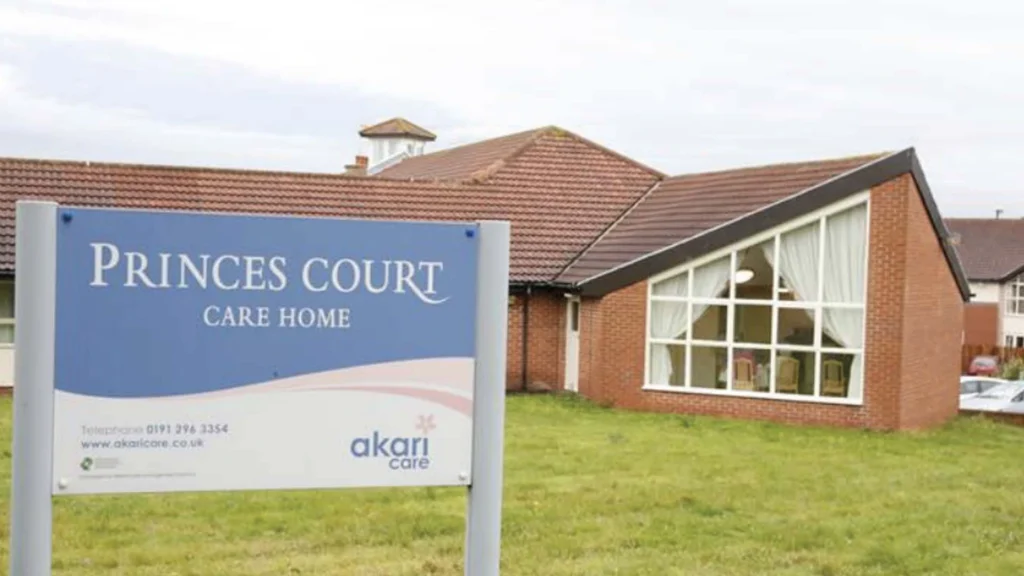
Princes Court is a 74-bed Intermediate care facility offering residential, rehabilitation, and nursing services. The primary aim of the facility is to provide short-term care for individuals so they can eventually return safely to their own homes.
To optimise resident recovery and safety, Princes Court implemented Wellbeing Sensors. The implementation was spearheaded by River Fajardo, an Advanced Clinician Practitioner at the site, who also used the technology as a key area for improving care and reducing falls for his ‘Service Improvement Dissertation’ research project with Northumbria University.
“We now have eyes in the back of our head! The system is incredible; the statistics and outcomes are extremely clear and evident. This has been such a brilliant help for staff and reassurance for family members.”
— River Fajardo, Advanced Clinician Practitioner
Key Performance Metrics
The data collected during the implementation period demonstrated remarkable improvements in safety and efficiency:
- 67% overall reduction in falls.
- 100% of falls successfully detected.
- 100% reduction in 1:1 care requirements.
- 1 minute typical response time.
- 42 average welfare checks conducted per night.
- 12.9 average bed exits attended per night.
The Catalyst: Providing Evidence of Care
Beyond clinical outcomes, a significant driver for adopting the technology was the need to transparently document the quality of care being provided.
Sylvia Dixon, Care Home Manager, explained the operational necessity: “There was an incident where the family litigated through the Courts based on neglect, as it was presumed that there was inadequate care. We invested in this technology as it had the capability to record events that are time stamped and provides evidence of the time of a fall and how quickly staff had reacted.”
The Solution: A Complete 360 Degree Approach
The Wellbeing Sensors deliver a full 360-degree solution to ensure that the best care is provided around-the-clock while keeping service users safe and maintaining their privacy and dignity. The Pre-Fall technology utilises acoustic, heart rate, respiratory rate, microwave, and thermographic sensors to alert staff before a resident even leaves the bed—all without the use of camera surveillance.
Drastic Falls Reduction
The system alerted staff to 5 falls across an 8-month period, ensuring zero falls were missed in any of the monitored rooms.
- When comparing the data to the previous year (the same 8 months in 2022), total falls dropped from 15 to just 5.
- In one specific instance, a resident in room 22 suffered seven falls between April and August 2023, including one that hospitalised her with a hip fracture (an injury that costs the NHS an average of £13,000, including rehabilitation care). Since the sensor was installed in August, she had zero falls.
Improved Response Times & Lifesaving Interventions
The technology guarantees rapid response times, with all recorded falls responded to in under 1 minute. This speed proved critical in non-fall-related medical emergencies as well.
In one event, care staff received an alert regarding a gentleman’s breathing and heart rate. The nurse attended to the resident, identified severe breathing issues, and the on-site paramedic had him swiftly admitted to the hospital.
The system also safeguards against the unpredictability of night shifts. A carer from Akari Care noted: “I received an alert to say there was a fall whilst I was in another resident’s room. I immediately rushed to the room to find the resident on the floor. I had just done the nightly 3am check and would not have gone back to that room for several hours.”
Holistic Clinical Outcomes
The continuous, customised monitoring provided by the Wellbeing Sensors yielded unexpected clinical benefits across the board:
- Nutrition and Hydration: 83% of service users showed a gradual increase in nutrition and hydration over a 9-month period, which was attributed to improved sleep cycles and staff attending to bed exits quicker.
- Challenging Behaviour: When the sensor was used daily, residents exposed to it for 12 hours showed significant positive behaviour changes, with zero noticeable negative changes occurring during this period.
To truly understand the system’s impact, the facility conducted a baseline test. River Fajardo noted: “We took away all of the technology for 3 weeks to see if the stats and outcomes would change. The falls, challenging behaviour and nutrition/hydration all regressed back to the previous baseline. This is when we truly knew the impact.”
(Note: An independent clinician has completed a white paper documenting the evidence, outcomes, and data collected during this project.)